
It was an early start to the day, Mark picking up John L and one of the convention speakers, Craig Stevens - who lived in Whitby, before setting off around 8am. Conditions were grey, but apart from work related traffic lights, good time was made arriving at the venue shortly after 9am. Helping Craig in with several boxes of exhibits for his presentation, a few familiar faces were clocked as we looked to find seats in the lecture room. WDAS members Lee and Paul Cass were present with John McCue and June arriving shortly after.
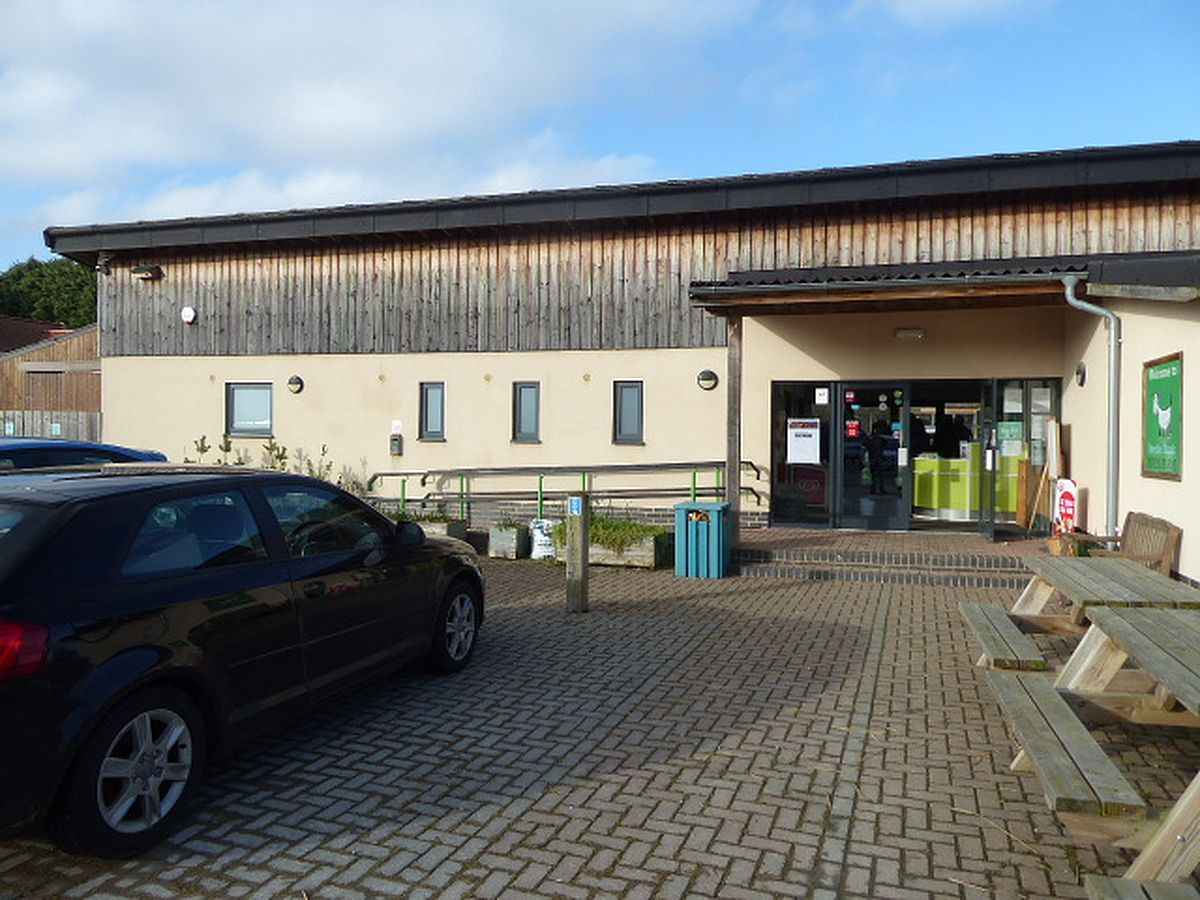
The venue - lecture room and cafe at Beetle Bank Farm. (Click for for image)
Following welcoming introductions, It was time for the first speaker.
Sue Bowler on Fred Hoyle: Yorkshire Grit Personified
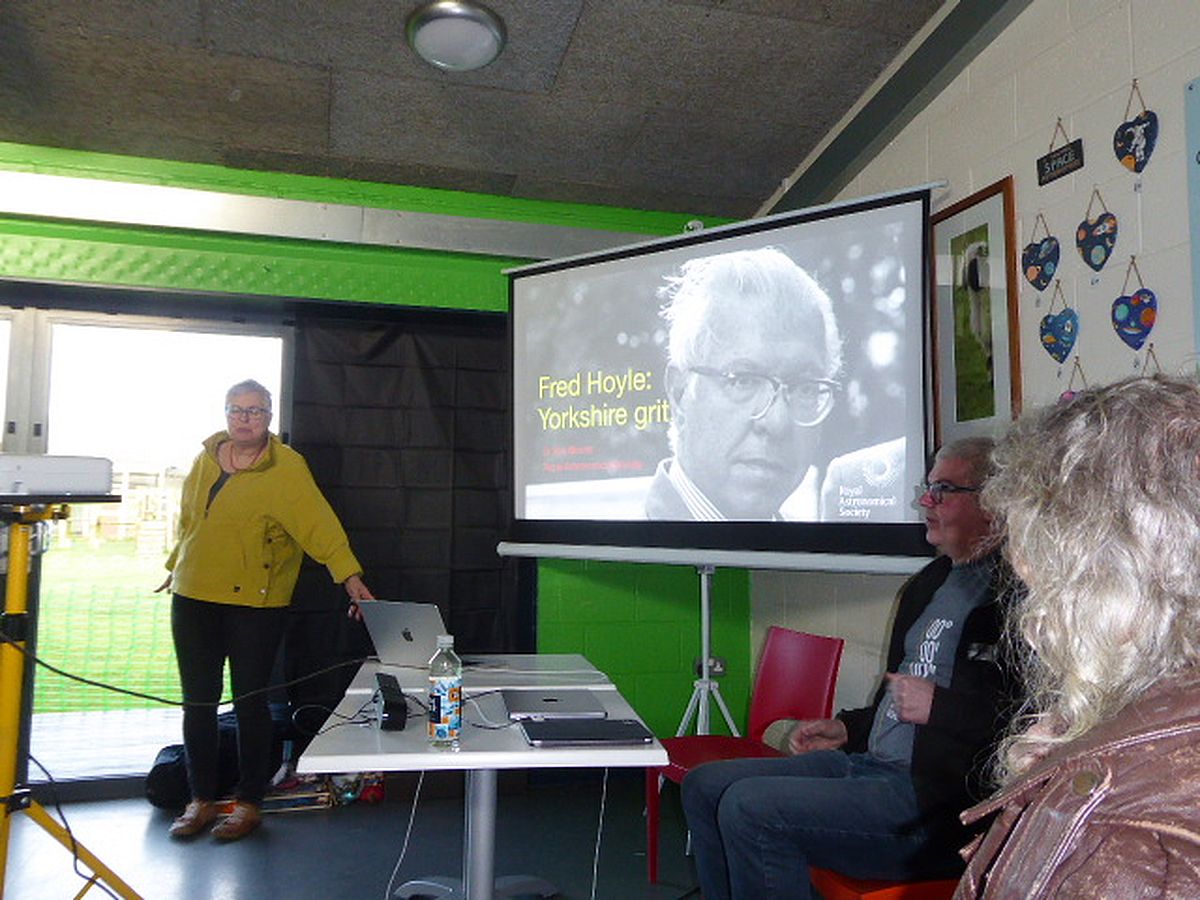
Sue, with image of legendary astronomer Fred Hoyle. (Click for for image)
This talk explored the life of Fred Hoyle (1915-2001), a major figure in twentieth-century astronomy whose independent spirit and controversial views sometimes overshadowed his significant accomplishments—a true embodiment of Yorkshire determination.
Sue discussed Hoyle’s formative years, his work for the Admiralty during the war, and subsequent postwar visits to the United States, where he established connections across various disciplines linked to astronomy and cosmology. These in turn culminated in pivotal research that contributed to our understanding of how elements composing us form within stars.
The talk also mentioned Hoyle’s numerous disputes with fellow scientists and organisations, which may have contributed to him never receiving a Nobel Prize. Hoyle is perhaps most famous for championing the 'steady state' theory over the now widely accepted Big Bang theory—ironically, it was Hoyle who coined the term "Big Bang" as a joking aside during an interview.
He was not only a celebrated public speaker but also authored many science fiction and popular science books. Regardless of whether one agreed with his ideas, Hoyle stood out as a candid and quintessential Yorkshireman.
Next up was our guest passenger Craig Stevens on Exploring Space, with True-to-Life Toys and Models.
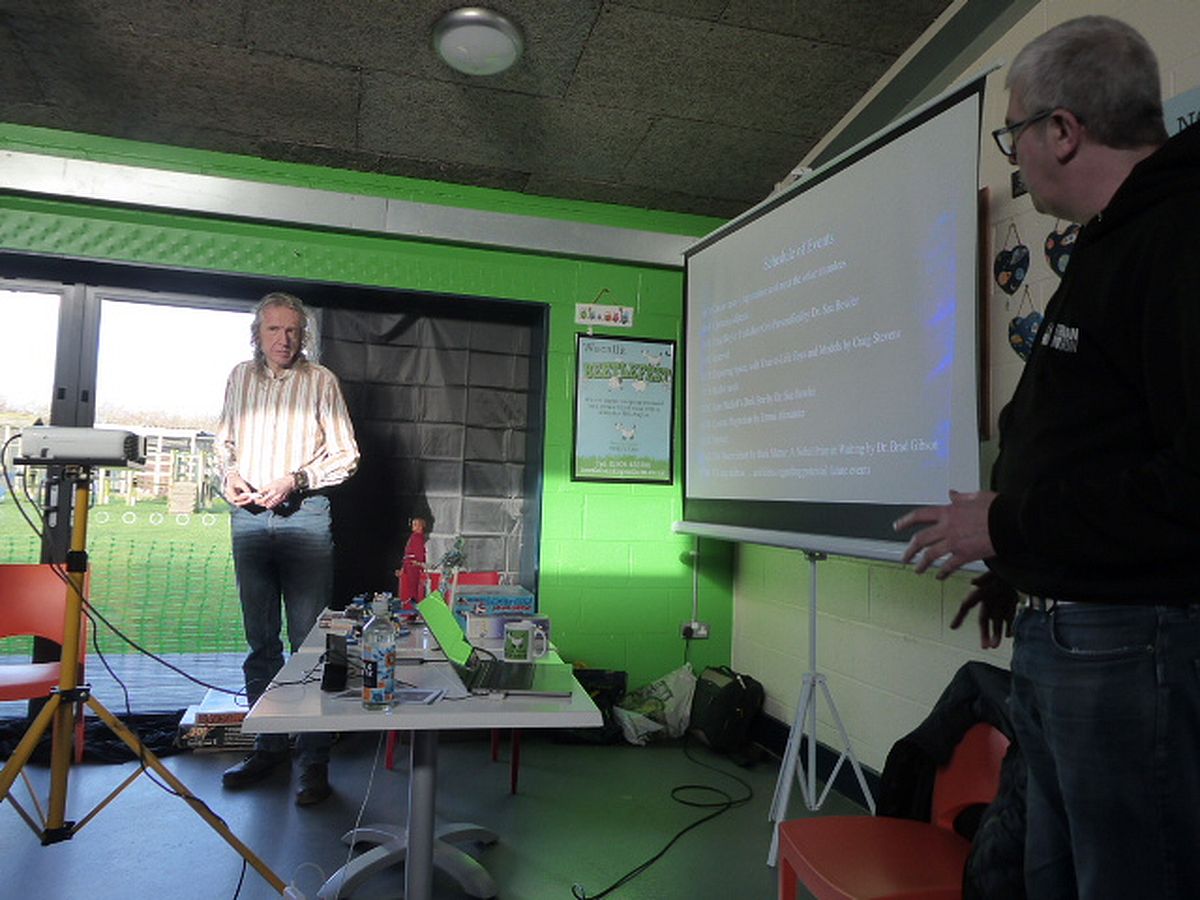
Craig and friends - battling the Sunlight! (Click for for image)
This was Craig’s first public talk in many years, focusing on space-based toys from the 1930s to the present day. He presented numerous images of these toys and models, collected by ‘enthusiasts’ of all ages, highlighting examples from early designs, post-WW2 developments, and the Cold War/UFO craze influenced by television and film.
Craig then discussed the space race era, during which NASA inspired manufacturers to create both realistic and imaginative representations of spaceships, landers, satellites, and more. He concluded with toys related to classic science fiction series from the late 1960s, 70s, and early 80s, a few examples of which were displayed on the table. Throughout the presentation (one of three plagued by sunlight hitting the screen), there were many whispered but overheard remarks such as, “I used to have one of those.”
Aahh, memories from childhood, or adulthood in some cases!
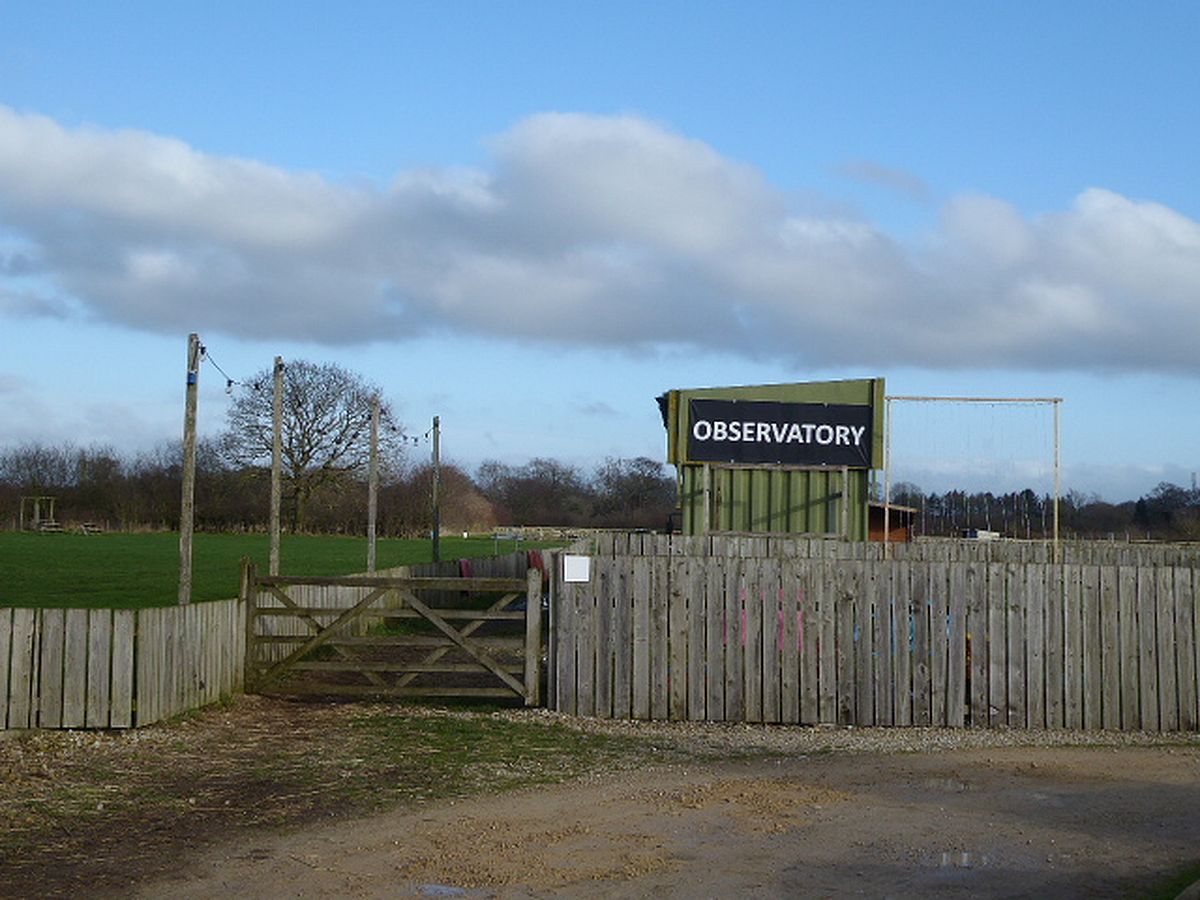 The YAS observatory site at Beetle Bank. (Click for for image)
The lunch break followed, food being brought from the attached cafe and set out on tables in a separate room to the presentation one. The spread was extensive - from baked potatoes, chips, sausage rolls, pizza slices, to pasta, quiche, sandwiches and more. There were also some large gateaux, cheesecakes and tarts - all self-service. In short - lunch was delicious!
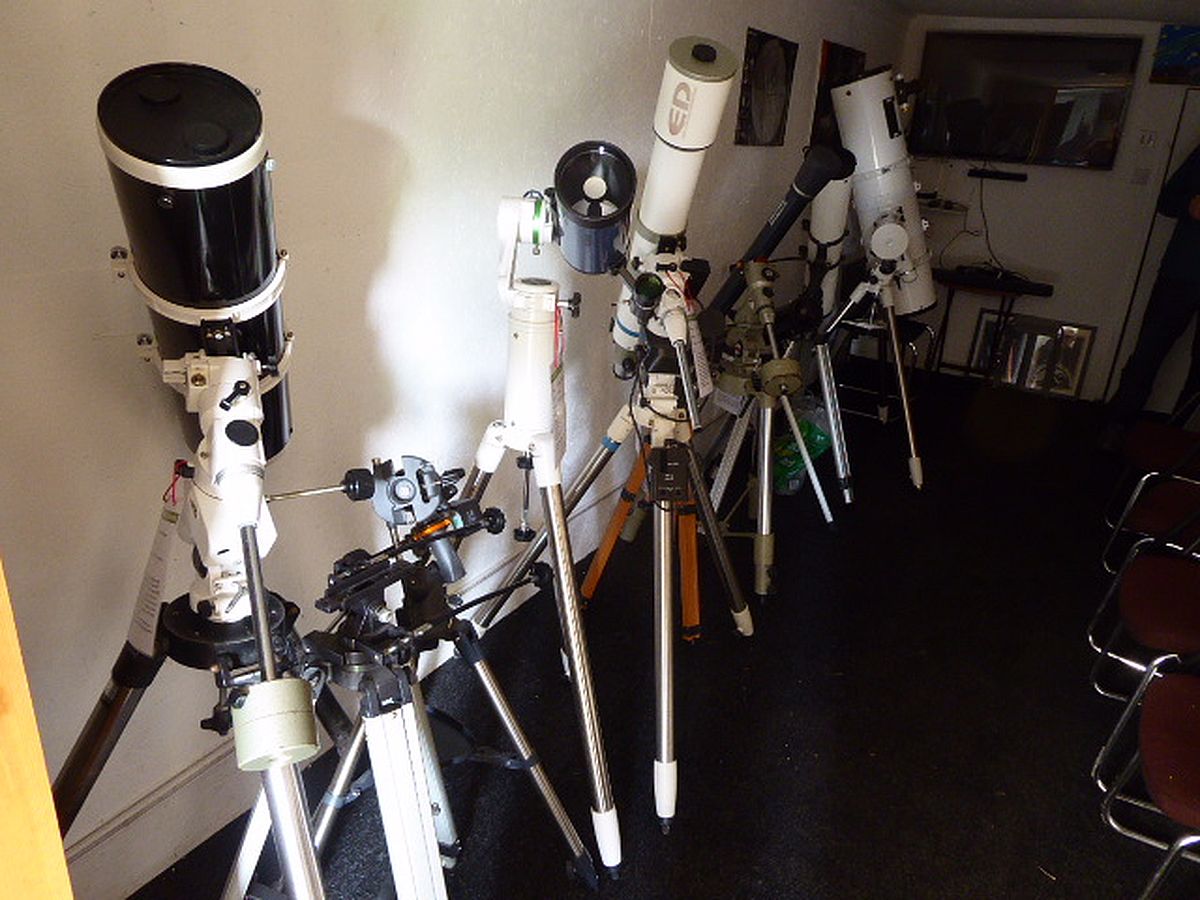
The YAS telescope collection. (Click for for image)
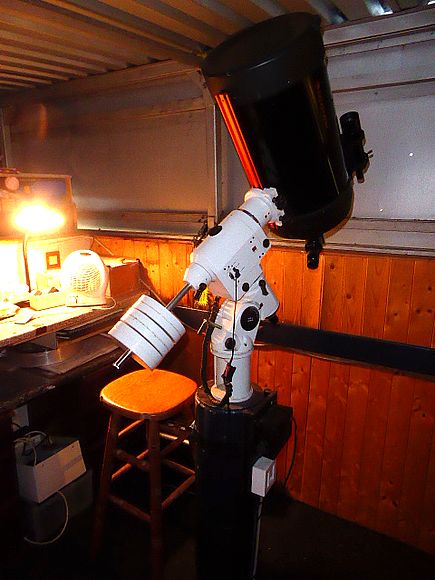
There was time for Mark and John L to visit the nearby YAS observatory 'shed - container' complex which housed the societie's telescope collection. Several large 'optical beasts were housed in an upper story, the roof of which could be opened allowing some great vistas for observations. It was an impressive set up, and YAS should be commended.

The optical beasts in the upper observing room, above and below images.
And so, back to the lectures and Sue Bowler (again) on John Michell’s Dark Star
This was a talk about John Michell (1724-1793) someone who many may not have heard of outside astronomical circles, but who first postulated the idea of a dark star: one so massive that even light could not escape from it – what we know as a black hole. Sue elaborated on his early work at Cambridge University on magnetism and geology, before moving on to his ideas on 'dark stars'. His later life was spent pondering gravity, devising an instrument to measure the mass of the Earth. Michell is buried at Thornhill Church, Dewsbury, where he spent the last 26 years of his life as rector.
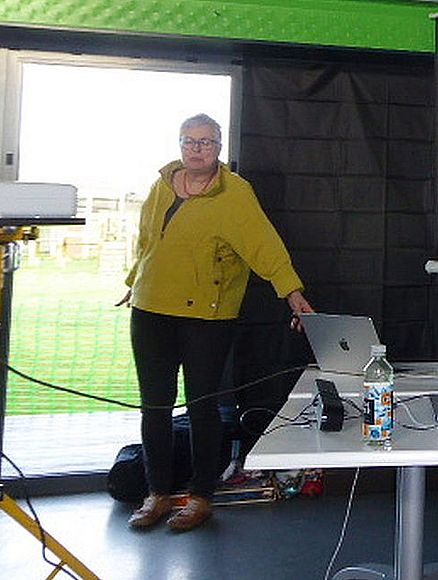
Sue Bowler.... again. A busy day for her!
Some very sad news that had come to light was then announced - the death of Dr Allan Chapman, sparking a minute’s applause for the great orator, astro-historian, writer and broadcaster. See obituary.
Emma Alexander on Cosmic Magnetism
A 'home grown' lecturer next - Emma, a dedicated lecturer who first joined the YAS aged 15, has demonstrated considerable promise in astronomy and is now pursuing postgraduate research in cosmic magnetism. In her presentation, Emma reviewed the history of our understanding of magnetism, noting that magnetic fields are ubiquitous throughout the universe and exist at various strengths and scales. She explained current methods for detecting magnetism in space and discussed its significance—highlighting how magnetic fields play a crucial role in star formation, drive cosmic jets, and influence galactic structures. Emma also emphasized that many questions remain regarding the origins, evolution, and interactions of magnetic fields with astrophysical material.
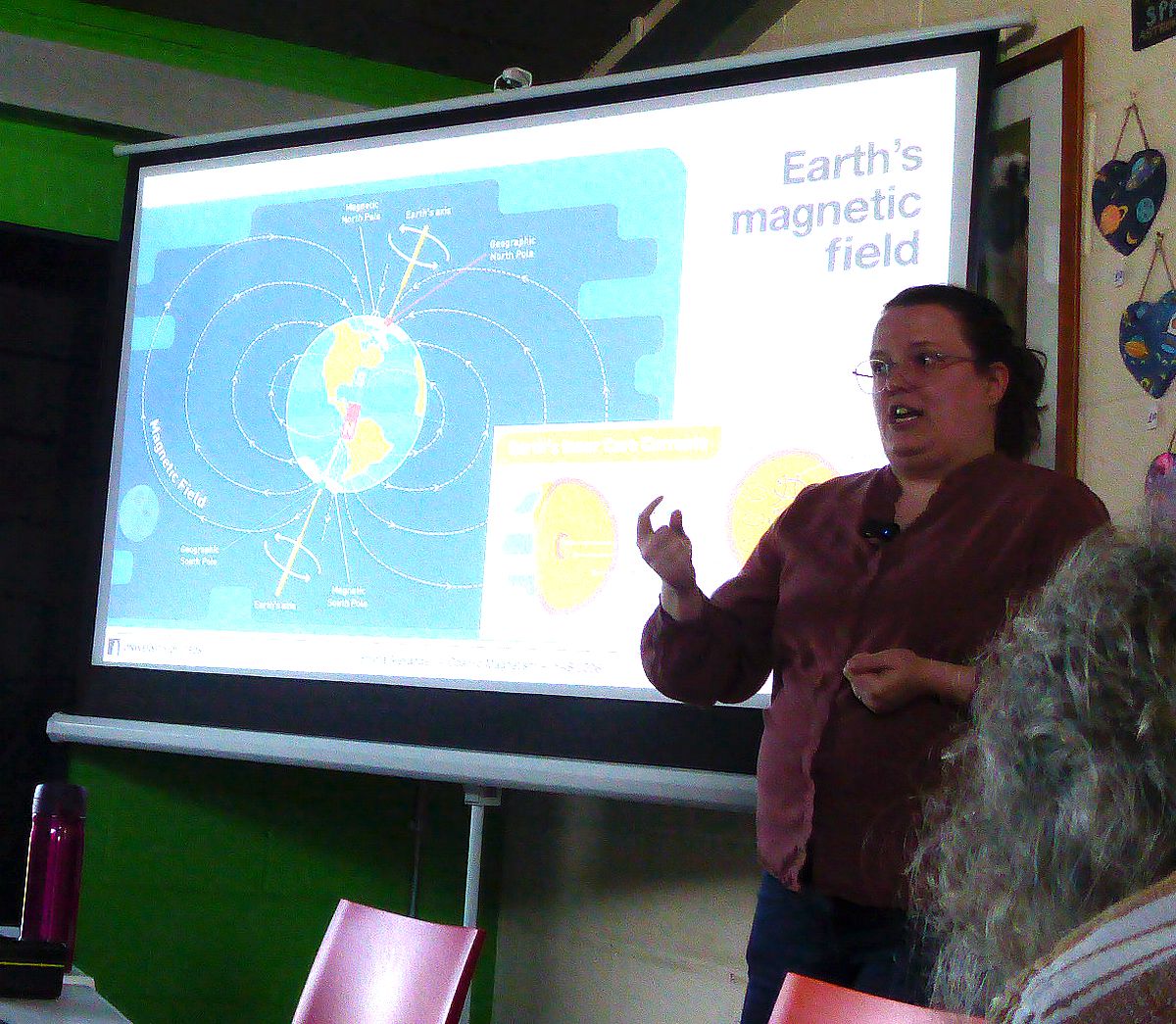
Emma Alexander - a magnetic personality. (Click for for image)
Following a further short break it was time for the final speaker of the day, Brad Gibson on The Elusive - The Hunt for Dark Matter: A Nobel Prize in Waiting
We have enjoyed several Brad Gibson lectures over the years – including Leeds Astro-meet and the FAS convention held in York in 2018. The now retired 'Canadian-Aussie-cum Brit' scientist never disappoints.
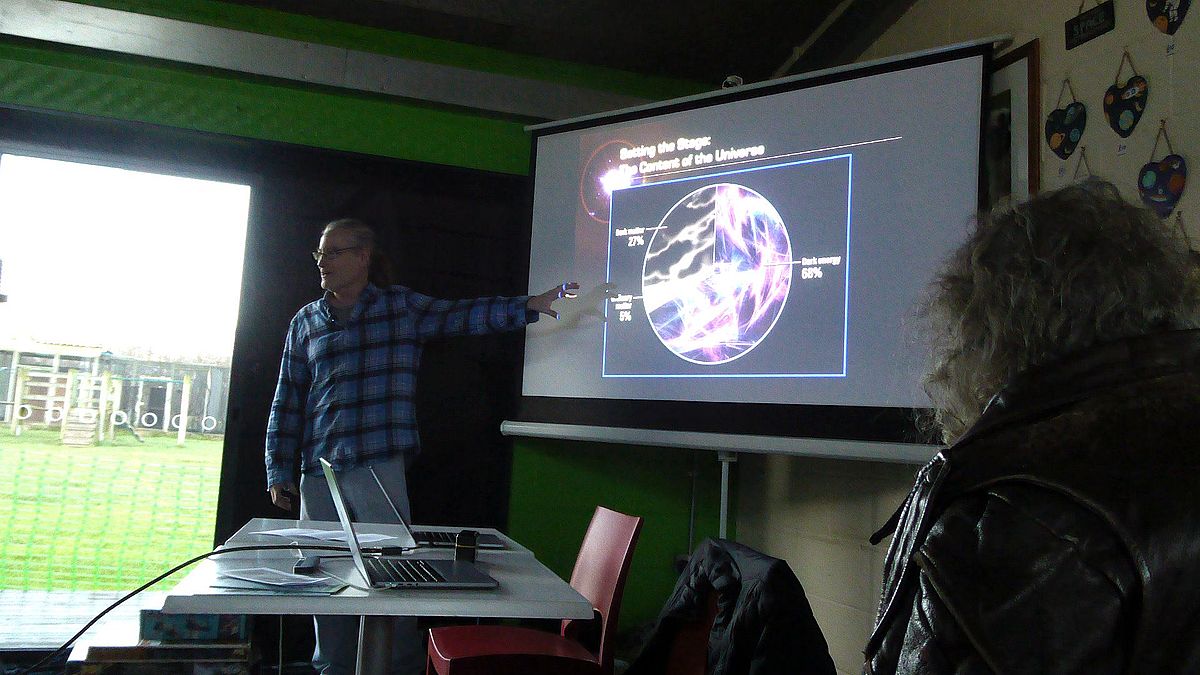
Prof Brad Gibson offers his take on Dark Matter...'Dunno'. (Click for for image)
The search for elusive Dark Matter, which forms a major part of the Universe's matter, is considered one of the most fascinating—and sometimes frustrating—mysteries of the past fifty years. If you've kept up with recent developments in science, you'll know this quest is driving a wide range of cutting-edge ground- and space-based experiments, such as the Vera Rubin Observatory, Euclid, and DESI. While some famous observations have confirmed Dark Matter's existence, many early and less-recognized studies laid the groundwork for what we now call 'Dark Matter'. Dr. Gibson highlighted several of these visionary works, bringing attention to the contributions of individuals whose efforts may have faded from memory.
At the start and end of his talk, Professor Gibson posed two fundamental questions about Dark Matter: what exactly is it, and when will we actually detect it on Earth? In his signature fashion, he gave the same honest, one-word response to both: "Dunno!"
That brought proceedings to a close. Concluding remarks delivered, thank you’s offered and suggestions sought on the day. How ironic, that on the day the Sun finally shone in clear blue skies (yes it did at York), the only real hiccup was the Sun itself - shining through an unreachable window directly onto the projector screen and washing out the content. It was one of the few things the organisers had not thought of - Sunshine indeed!!!
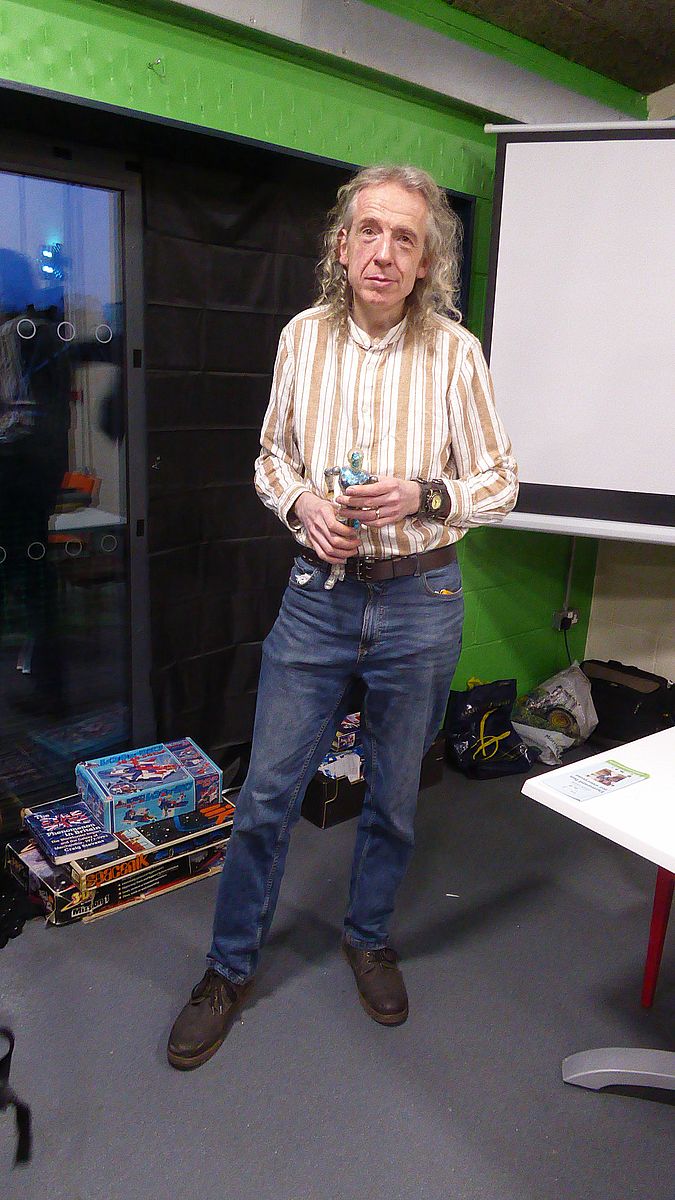
Steve and friend.
- Log in to post comments

