It's been a big news week for space, so let's have a round-up in the Newsletter.

- Log in to post comments

It's been a big news week for space, so let's have a round-up in the Newsletter.
All being well Paul is set to return to Whitby in May. The venue will be the college main hall (Whitby college as was) May 9th is the date ‘inked in’ and we will be looking to start around 19:30pm. No definite topic as yet, although Paul has suggested an updated talk on Voyager, to coincide with its 40th anniversary since launch. [Read more about Paul Money Lecture 2017]
 It's going to be a busy late-March and into April.
- and possibly more... [Read more about Star party, Visits and Events]
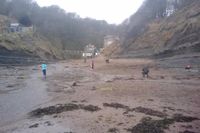 The first of the events (a last minute unscheduled event on the 18th) was predominantly clouded out. Mark and Keith therefore enrolled the scouts in helping to demonstrate the scale solar system.
There were certainly plenty of them, so they had to be split into two groups. The demos went well and no scouts were lost in the sea. [Read more about Boggle Hole Event(s)]
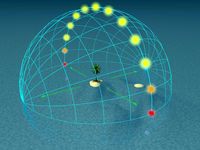 The date of the Vernal Equinox and officially the start spring in the northern hemisphere falls on March 20th this year. This is when the Sun's path - the ecliptic - first crosses the celestial equator on its apparent journey northwards into the sky... [Read more about The Spring Equinox]
All being well Paul is set to return to Whitby in May. The venue will be the college main hall (Whitby College as was) May 9th is the date ‘inked in’ and we will be looking to start around 19:30h. No definite topic as yet, although Paul has suggested an updated talk on Voyager, to coincide with its 40th anniversary since launch. [Read more about Paul Money lecture]
We have been invited to another ‘Star Night’ hosted by Eskdale School. This year’s event will take place on Wednesday 22nd of March, starting from 19:00h. The York University people will be on hand with the inflatable planetarium, and there will be food, soup, cakes, drinks etc available... [Read more about Eskdale School Event]
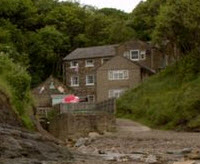 If skies are reasonably clear on Feb 25th we have been invited to host a star party down at Boggle Hole Youth Hostel. The event commences at 19:00h until around 20:30h.
Last year, the same event attracted large numbers ofthe public; indeed Keith and Mark were swamped at the two scopes deployed. We will discuss arrangements at the February meeting. [Read more about Boggle Hole Event]
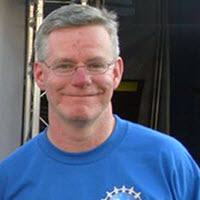 "So what are gravity waves", Prof Hendry asked? How did we detect them, and what can they tell us about the Universe. It took Einstein to figure out gravity’s true modus operandi. Gravity, Einstein showed, did not just make what goes up always come down. Gravity made the universe go round! ... [Read more about Astromeet 2017 Talk Summary: Prof Martin Hendry: ♫ Gravity sang ♫ and LIGO was listening. (How we detected Gravity Waves)]
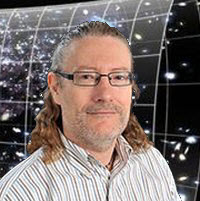 Bard Gibson is the Professor of Astrophysics director at the Centre for Astrophysics in Hull. He and his research team use some of the most powerful computers available to generate simulations of large scale structures in the Universe (such as galaxies). And that's what his talk was about... [Read more about Astromeet 2017 Talk Summary: Prof Brad Gibson: Building spiral Galaxies with supercomputers ]
| Sun | Rise | Set |
|---|---|---|
| Actual | 07:47 | 17:45 |
| Civil Twilight | 07:10 | 18:22 |
| Nautical Twilight | 06:29 | 19:04 |
| Astronomical Twilight | 05:47 | 19:45 |
| Moon | Rise | Set |
|---|---|---|
| 16:42 | 04:07 |
